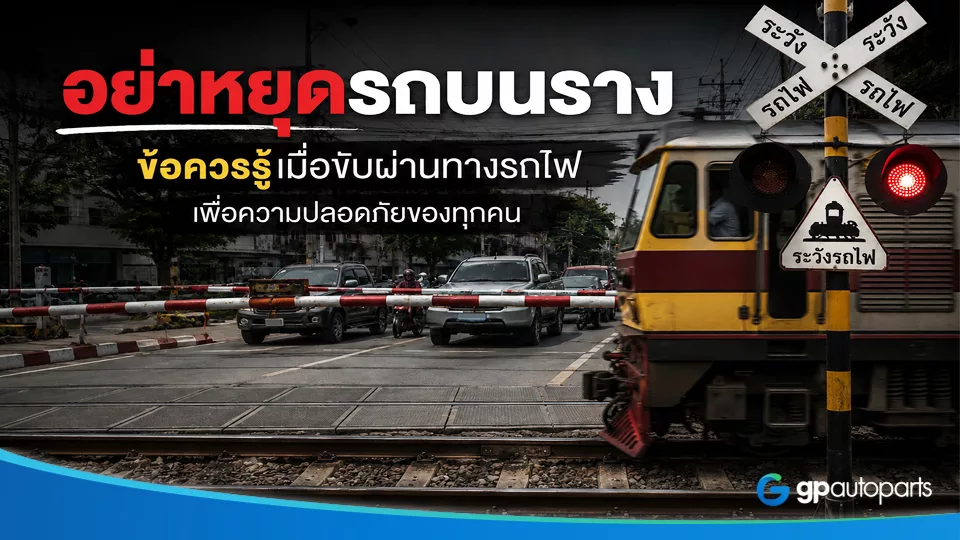
Never Stop on Railway Tracks: What Drivers Need to Know for Everyone’s Safety
The collision between a train and a bus in the Makkasan–Asok area, which resulted in multiple injuries and fatalities, was another tragic incident that brought renewed public attention to railway crossing safety.
Many people may think of railway tracks as just another point along their daily route. In reality, railway crossings require a very high level of caution, because a mistake of only a few seconds can lead to a serious accident.
Why Should You Never Stop on Railway Tracks?
Railway tracks are not a place to park or wait for traffic to move. Whether you are driving a passenger car, pickup truck, commercial truck, or bus, entering the crossing when traffic ahead is blocked, the vehicle breaks down, or there is not enough space to move forward can leave the vehicle stranded directly in the path of a train.
The most important rule is to make sure there is enough clear space beyond the tracks before crossing. If the vehicle ahead has not completely cleared the crossing or traffic on the other side has stopped, wait before the tracks — even if the warning lights or barriers have not yet been activated.
What You Should Know When Crossing Railway Tracks
1. Slow Down Every Time You Approach a Railway Crossing
When you see railway warning signs, flashing lights, hear warning signals, or notice crossing barriers, reduce your speed immediately and proceed with extra caution.
The Department of Land Transport recommends always checking warning signs, audible signals, and flashing lights before crossing railway tracks.
2. Stop at a Safe Distance from the Tracks
If you hear a warning signal or see that a train is approaching, stop at least 5 metres away from the railway tracks.
Wait until the train has completely passed and there is a clear signal that vehicles may safely continue before proceeding.
3. Do Not Overtake Near a Railway Crossing
The area approaching a railway crossing is a high-risk zone where overtaking should be avoided. Overtaking may block your view of an approaching train or warning signals and could leave your vehicle trapped on the tracks.
The Department of Land Transport advises drivers not to overtake another vehicle within 30 metres of a railway crossing.
4. Do Not Follow the Vehicle Ahead Too Closely
Many accidents happen because drivers follow the vehicle in front without checking whether there is enough space beyond the crossing.
If the vehicle ahead stops suddenly or traffic becomes congested, your vehicle could be left stranded on the tracks.
The safest approach is to wait until there is enough space for your entire vehicle to clear the tracks before moving forward.
5. If Traffic Is Congested, Do Not Force Your Way Across
If traffic ahead is moving slowly or there is a possibility that you may have to stop on the tracks, remain behind the crossing.
Do not assume that “traffic will move in a moment,” because unexpected delays can occur at any time, particularly during heavy traffic, rain, or poor visibility.
What Should You Do If Your Vehicle Breaks Down or Gets Stuck on the Tracks?
If your vehicle breaks down or becomes stuck on the railway tracks, the first priority is to stay calm and get everyone out of the vehicle immediately.
Do not remain inside the vehicle trying repeatedly to restart it or fix the problem for too long, because trains require a much greater stopping distance than road vehicles.
Once everyone is out of the vehicle, move away from the tracks to a safe location and contact the relevant authorities as quickly as possible.
If railway crossing staff are present, notify them immediately so they can coordinate emergency action or help warn the approaching train.
Every time you approach a railway crossing, remember one simple rule:
“Do not cross unless you are certain you can clear the tracks completely.”
Waiting just a few extra seconds can help prevent a loss that can never be undone.
Road safety does not depend only on warning systems or railway staff. It also depends on the decisions made by every driver.
Slowing down, stopping when necessary, and refusing to cross when conditions are unsafe are simple actions that can protect you, your passengers, and other road users.
Railway crossings require extra caution whether they are located in urban areas or on rural roads.
Before crossing, always look left and right, listen for warning signals, check the barriers, and make sure there is enough space ahead for your entire vehicle to clear the tracks safely.
Because on the road, safety begins with staying alert. Most importantly:
“Never stop on railway tracks — make sure it is safe before crossing.”
Thank you to the information source: